
Technology is not our saviour

I have a complicated history with science, technology and math.
I grew up on sci-fi, went to school for engineering, and worked for many years on interesting and challenging public safety projects. It took me a long time to recognize and understand my unhealthy relationship with technology, including my unrealistic delusions. Idealism is a great motivator, but reality teaches us some hard lessons.
Technology has its place in life, but it is not a benevolent saviour.
What is technology as a generic concept?

Technology comes from the root words:
Technology can be thought of as “the systematic treatment of an art, craft or technique.” After 1859, technology commonly referred to “the study of mechanical and industrial arts,” such as manufactured or scientifically engineered products.
I like to think of technology as the materialization of a function.
For example.
A chair provides a sit function, a spoon provides a scoop function, a lathe provides a cylindrical manufacturing function, etc.
Each type of technology consists of more than one function. Not only are there end-user functions, but also manufacturing, quality assurance and maintenance functions as well.
Engineering disciplines embody these functions through processes and standards.
Functions on their own are neither good nor evil, thus it is a fair claim that technology alone is not good or evil. However, our relationship with technology is certainly a different story. From the human experience, what is good or evil?
There are many ways to consider this question, however I prefer to use a simple word game. Good results in Life and Evil results in Death (from the human experience).
This is a cheap word play, but heuristically good technology should improve life.
Likewise, any technology considered bad has a destructive quality about it.

There is more to say about our relationship with technology though, and this expands into the concept of using technology responsibly. From my experience, Responsibility can be described as the following.
Education.
Do I understand the technology at a level explainable to a 12 year old?Competence.
Am I able to use, maintain or find alternatives for the technology?Morality.
Does the technology improve life and minimize destruction?
Irresponsible use of technology is the opposite of this definition, and includes ignorance, incompetence and immorality.
However, the above falls short on the subject of morality.
Judging a net benefit to life does not exclude the negative aspects of utilitarian and Malthusian thinking. To flush out this idea, I refer to one of the classical stories of good and evil, otherwise known as the Temptation of Christ.
The Temptation of Christ
The Temptation of Christ is a biblical new testament narrative from the gospels of Matthew, Mark and Luke. After his baptism, Jesus was tempted by the devil while fasting for 40 days and nights in the Judaean Desert. The gospels of Matthew and Luke describe the encounter as a conversation between Jesus and Satan.
Below is the narrative from the gospel of Luke (New International Version).
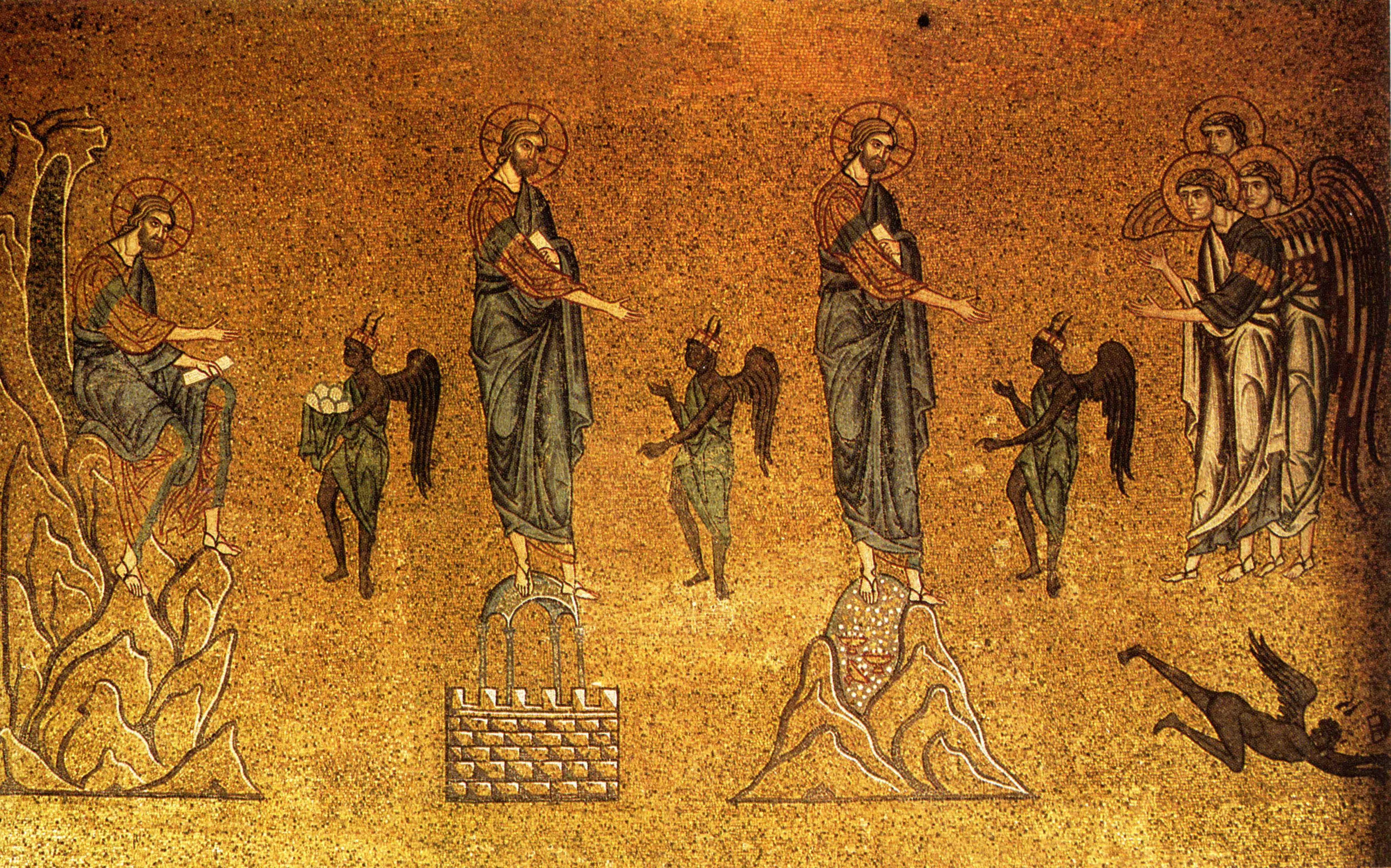
1 Jesus, full of the Holy Spirit, left the Jordan and was led by the Spirit into the wilderness, 2 where for forty days he was tempted by the devil. He ate nothing during those days, and at the end of them he was hungry.
3 The devil said to him, “If you are the Son of God, tell this stone to become bread.”
4 Jesus answered, “It is written: ‘Man shall not live on bread alone.’[b]”
5 The devil led him up to a high place and showed him in an instant all the kingdoms of the world. 6 And he said to him, “I will give you all their authority and splendor; it has been given to me, and I can give it to anyone I want to. 7 If you worship me, it will all be yours.”
8 Jesus answered, “It is written: ‘Worship the Lord your God and serve him only.’”
9 The devil led him to Jerusalem and had him stand on the highest point of the temple. “If you are the Son of God,” he said, “throw yourself down from here. 10 For it is written:
“‘He will command his angels concerning you
to guard you carefully;
11 they will lift you up in their hands,
so that you will not strike your foot against a stone.’[d]”
12 Jesus answered, “It is said: ‘Do not put the Lord your God to the test.’”
13 When the devil had finished all this tempting, he left him until an opportune time.
There are multiple ways to interpret this story.
The Temptation of Christ appears throughout art, literature, film and music, because it speaks to the inherent evil temptations everyone experiences throughout their life.
My interpretation simplifies into the Three Temptations to Control:
The Material World.
Alter the material world to satisfy desires.People.
Rule and command the masses.God.
Can also be read as ‘control nature’ or ‘control truth.’
Another theme within the Temptation of Christ is fear.
In exchange for worship, the devil offers his solutions using the fear of death.
This helps to fill in the morality aspect of responsibility. When it comes to technological use, we should ask ourselves some important questions.
Are we using technology to control the world, people or nature?
Are we using technology because of fear?
Are we worshipping technology?
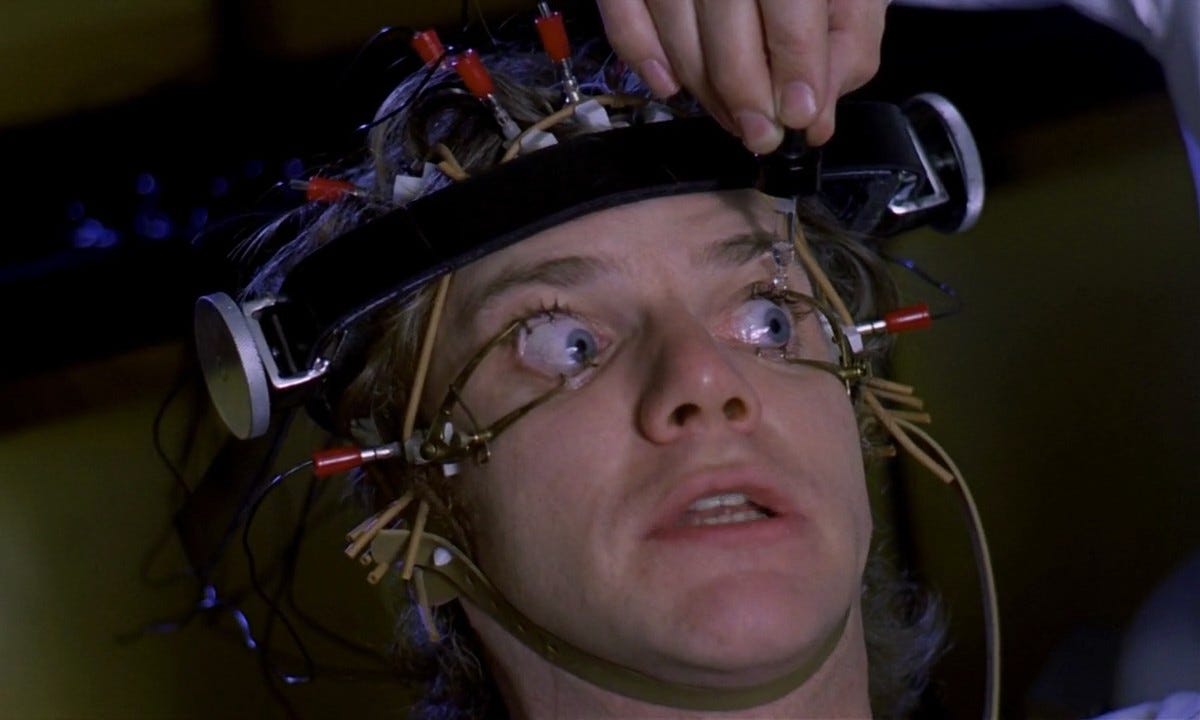
Putting it together
As we enter this time of change, we have to decide how we form our relationships with new technology. Remember, not all technology is digital.
We are seeing the emergence of several suspicious initiatives:
City planning and individual control.

Government and workplace behavioural control.

Economic participation through financial control.

.jpg)
If we attempt to answer the following questions, it will give us a first order indication if an application of technology is good or evil. (Note a first order indication is simply just a warning to raise suspicion and skepticism.)
Are advocates educated, competent and moral?
Are advocates trying to control the material world, people or nature?
Are advocates promoting through fear?
Consider these questions in relation to the recent COVID-19 mRNA technology.
Also consider green energy initiatives…
Yuval Harar1 of the World Economic Forum explains that modern technology can be used to control humans beings, and will require new systems of government.
But some governments and corporations for the first time in history have the power to basically hack human beings.
There is a lot of talk about hacking computers, hacking smartphones, hacking bank accounts, but the big story of our era is the ability to hack human beings. And by this I mean that if you have enough data and you have enough computing power you can understand people better than they understand themselves and then you can manipulate them in ways which were previously impossible. And in such a situation the old democratic system stopped functioning. We need to reinvent democracy for this new era in which humans are now hackable animals.
You know the whole idea that humans have you know this they have this soul or spirit, and they have free will and nobody knows what's happening inside me, so whatever I choose whether in the election or whether in the supermarket this is my free will, that's over.
We need to come to terms with the fact that no but again this is what philosophy meets computer science and biology.
— Yuval Harar
If this doesn’t send a shiver down your spine I don’t know what will.
I try to have a basic understanding of how the technology I use is produced, works, and how it satisfies my needs. I also consider the risk of its failure or unavailability.
I have no issue changing my lifestyle or relationship with technology to fit the paradigm I created above, because I believe this is a necessary step to become more independent and self-sufficient.
In regards to questionable new technologies, my opinion is that:
We shouldn’t use any technology irresponsibly.
We shouldn’t use any technology that causes harm.
We shouldn’t use any technology to control nature, the world or the people in it.
We shouldn’t use any technology because of fear.
Technology is not a god and should not be worshipped as one.

Yuval Noah Harari (born 1976) is an Israeli public intellectual, historian and professor in the Department of History at the Hebrew University of Jerusalem.
Great essay Thoedore. I especially like the Clockwork Orange image. https://frederickrsmith.substack.com/p/a-clockwork-orange
💯 I enjoyed your essay… I also have a background in mathematics, engineering and IT… The dystopian future is here